
 See My Latest Article on HelloNation
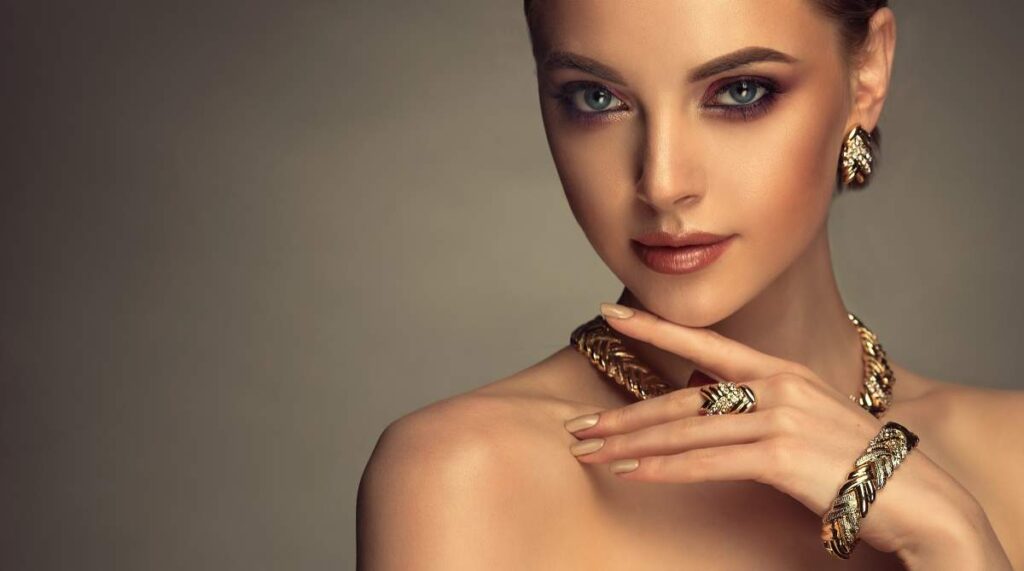
Matching jewelry with clothing is less about following strict fashion rules and more about balancing color, scale, texture, and occasion. The right pieces should support an outfit without competing with its most noticeable features.
How should jewelry match the color of an outfit?
Jewelry does not need to be the exact same color as clothing to look coordinated. Instead, look for relationships between the metal, gemstones, and the overall tone of the outfit.
Warm clothing colors such as cream, camel, rust, olive, mustard, coral, and warm brown often pair naturally with yellow gold, rose gold, amber, citrine, garnet, and earthy gemstones. Cooler colors such as navy, icy blue, gray, lavender, emerald, and crisp white often work well with silver, platinum-colored metals, blue stones, amethyst, and diamonds.
Some color combinations are especially easy to wear:
- Black clothing provides a neutral background for nearly any metal or gemstone.
- White and ivory clothing can make both bright and subdued jewelry noticeable.
- Denim works well with simple gold, silver, pearl, or colored-stone pieces.
- Green clothing can complement both yellow gold and cool-toned metals, depending on the shade.
- Red and coral clothing usually look best with jewelry that is simple rather than highly competitive.
The goal is coordination, not perfect matching. Jewelry that repeats one small color from a pattern can create a deliberate appearance without looking overly arranged.
Should the jewelry match the neckline?
Yes, the neckline is one of the most useful guides for choosing a necklace. The shape and height of the neckline determine how much space is available for a pendant or chain.
A crew neck or high neckline often works with a shorter necklace, pendant worn above the fabric, or no necklace at all with more attention placed on earrings or a bracelet. A V-neck usually pairs well with a pendant that follows the same downward shape. A scoop neckline can support a curved necklace, a short chain, or several delicate layers.
For collared shirts, a small pendant tucked beneath the collar can look neat, while a longer pendant can create a more relaxed appearance over the fabric. Strapless and open-neck clothing provide space for a statement necklace, but a simple chain may be more balanced if the outfit already includes bold details.
A common mistake is wearing a necklace that ends at the same visual point as the neckline. Slightly shorter or longer lengths generally create a cleaner separation.
How can earrings balance a hairstyle and outfit?
Earrings should be considered alongside the face shape, hairstyle, and neckline. They are often the most visible jewelry because they remain near the face.
Studs and small hoops are versatile with glasses, patterned clothing, workwear, and high necklines. Drop earrings can add length and movement, particularly with pulled-back hair or an open neckline. Larger hoops and sculptural earrings can work well with simple clothing but may feel crowded alongside a bold necklace.
If the outfit includes a dramatic collar, ruffles, sequins, or a busy print, smaller earrings may provide better balance. If the clothing is plain and the hair is pulled back, more noticeable earrings can serve as the main accent.
Comfort also matters. Earrings that are too heavy can stretch the earlobe, cause soreness, or become distracting during a long day. This can be especially relevant during outdoor gatherings, seasonal events, or warm, humid weather when skin may already feel sensitive.
When should jewelry be simple, and when can it be bold?
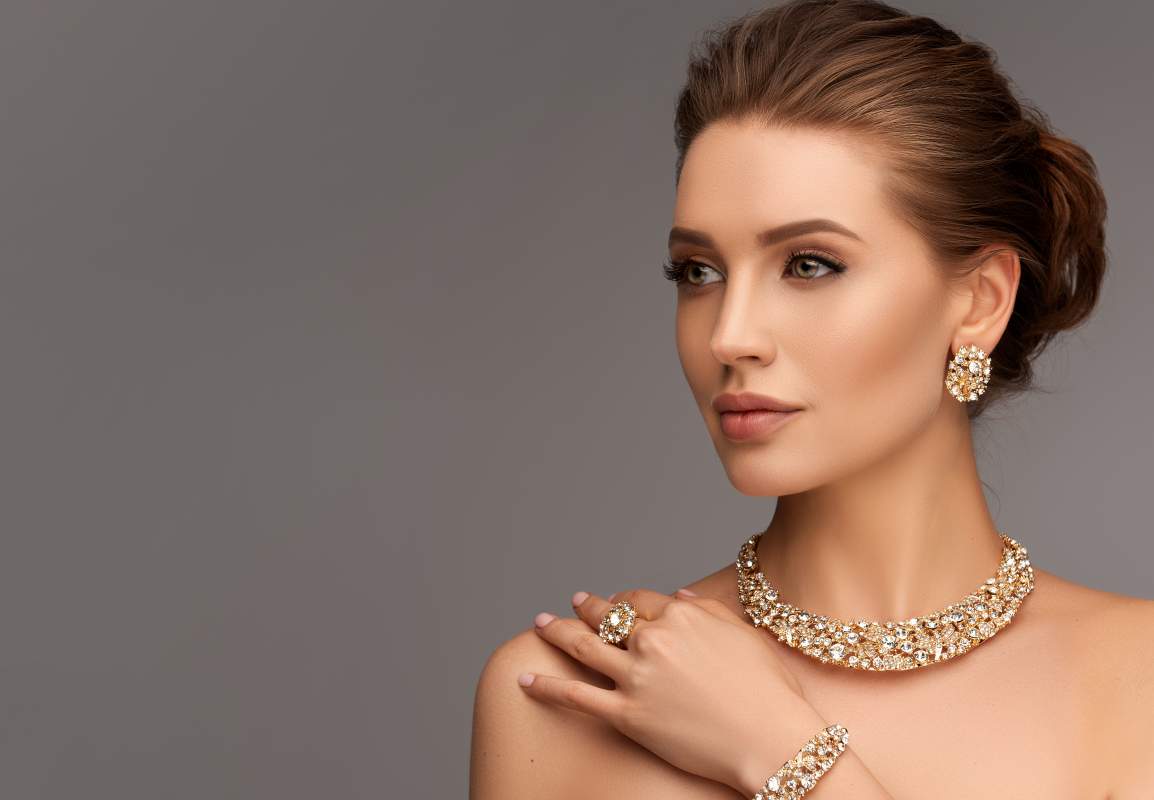
A useful rule is to choose one main statement area. If the necklace is large or highly detailed, keep the earrings and bracelet quieter. If large earrings are the focal point, a fine chain or no necklace may create a more balanced result.
Bold jewelry can be appropriate with:
- Solid-colored clothing
- Simple necklines
- Minimal patterns
- Evening outfits
- Structured garments with clean lines
More restrained jewelry is usually easier to wear with:
- Floral or geometric prints
- Ruffles and layered fabric
- Large buttons or decorative collars
- Clothing with sequins or metallic details
- Casual outfits with several visual elements
This does not mean every piece must be delicate. Several substantial pieces can work together if they share a metal color, design language, or overall shape. The problem usually comes from too many unrelated focal points rather than from size alone.
Is it acceptable to mix gold and silver jewelry?
Yes. Mixing metals can look intentional when there is some connection between the pieces. A two-tone necklace, a ring that includes more than one metal, or repeated shapes can help create unity.
For a controlled mixed-metal look, try keeping one metal dominant and using the other as an accent. For example, mostly yellow-gold jewelry with one silver-toned ring may appear more organized than an equal mixture of unrelated pieces.
Repeating the mix in more than one area also helps. If a necklace combines gold and silver, a bracelet or ring with a similar combination can make the styling feel deliberate. Randomly combining heavily polished, highly ornate pieces may look less cohesive.
Metal mixing is particularly useful for residents who wear sentimental jewelry collected over time. Pieces do not need to belong to the same set to work together, provided their scale and visual weight are reasonably compatible.
What jewelry works best for casual outfits?
Casual clothing usually benefits from jewelry that is durable, comfortable, and easy to combine. Small hoops, simple chains, stackable rings, stud earrings, and understated bracelets can add polish without making everyday clothing feel formal.
With sweaters, knit tops, and layered clothing, longer pendants can provide contrast against thicker fabric. However, chains should be checked for snagging, especially around textured knits, scarves, and loosely woven garments.
For warm-weather clothing, lightweight earrings and shorter necklaces may be more comfortable. Sweat, sunscreen, salt, chlorine, and moisture can affect some metals, finishes, and gemstones, so jewelry worn during outdoor activities should be chosen with care. Removing pieces before swimming, exercising, or applying lotions can reduce buildup and surface damage.
What are the most common jewelry-matching mistakes?
Several choices can make an outfit appear visually crowded or disconnected:
- Wearing a large necklace with equally large earrings and a heavily detailed neckline
- Choosing jewelry that blends into the clothing so completely that it disappears
- Matching every accessory exactly, creating a rigid or overly coordinated appearance
- Ignoring the practical demands of the setting, such as snagging, noise, or weight
- Wearing rings or bracelets that compete with prominent cuffs, watches, or decorative sleeves
- Selecting jewelry only by color while overlooking scale and proportion
Another overlooked factor is movement. A bracelet that is comfortable while standing may become irritating while typing, cooking, driving, or working with the hands. Jewelry should suit the activities of the day as well as the appearance of the outfit.
How should jewelry be chosen for work, celebrations, and formal events?
For work or everyday errands, moderate scale and secure fastenings are generally practical. Jewelry should complement the clothing without making constant noise or requiring repeated adjustment.
For celebrations, color and texture can be more expressive. A gemstone that picks up a shade from a dress, scarf, or shirt can create a coordinated appearance without requiring an exact match.
Formal clothing can support more refined pieces, but restraint is still useful. A single memorable necklace, earrings with a clean silhouette, or a coordinated ring and bracelet may be more effective than wearing every statement piece at once.
The setting should guide the final decision. Jewelry for an outdoor gathering may need to be lighter and more secure than jewelry selected for an indoor dinner. Seasonal conditions in the area, including summer humidity and winter layering, can also affect comfort, visibility, and the risk of snagging.
A simple method for deciding what to wear
Start by identifying the outfit’s strongest feature: its color, neckline, pattern, fabric, or shape. Then choose jewelry that either supports that feature or provides controlled contrast.
A practical sequence is:
- Select the main jewelry piece.
- Check whether its size suits the neckline and fabric.
- Add one or two quieter pieces for balance.
- Look at the outfit from a normal conversational distance.
- Remove anything that feels distracting, uncomfortable, or unrelated.
Good jewelry styling should make the entire outfit feel more considered, not make the accessories seem like separate objects competing for attention.