
 See My Latest Article on HelloNation
What does “fake gemstone” actually mean?
A gemstone described as “fake” may be an imitation, a laboratory-grown stone, or a natural stone that has been treated. These categories are different, and the distinction matters.
An imitation or simulant is a material that resembles another gemstone but does not have the same chemical or physical properties. Cubic zirconia, colored glass, and synthetic spinel may imitate diamond, sapphire, or other gems.
A laboratory-grown or synthetic gemstone has essentially the same chemical composition and crystal structure as its natural counterpart, but it was created in a controlled setting rather than formed underground. A lab-grown ruby is still a ruby, although it is not a natural ruby.
A treated gemstone began as a natural or laboratory-grown material but was altered to improve color, clarity, durability, or appearance. Heat treatment, dyeing, fracture filling, and coating are examples.
For residents examining inherited jewelry, secondhand pieces, or online purchases, the first question should be: Is the stone being represented accurately? A treated or laboratory-grown gem is not automatically poor quality, but it should not be presented as an untreated natural stone.
Can appearance reveal a fake stone?
Appearance can provide clues, but it rarely proves identity by itself. A bright color, perfect clarity, or unusually large size may deserve closer attention, yet natural gemstones can also be vivid, clean, and attractive.
Look at the stone under a bright, neutral light and, if possible, through a 10-power loupe. Useful observations include:
- Bubbles: Round gas bubbles inside a stone can suggest glass, although not every imitation contains them.
- Uneven color: Concentrated color along cracks or near the surface may indicate dye.
- Surface coating: A thin, uneven layer of color around facet edges or in recessed areas may indicate a coating.
- Abrasion: A very soft imitation may show worn facet junctions, scratches, or a cloudy surface.
- Unusual clarity: A large colored stone with no visible internal features may deserve additional testing, especially if its price seems inconsistent with its appearance.
- Internal features: Natural inclusions can support a gemstone identification, but inclusions are not automatically proof of natural origin. Laboratory-grown stones can also contain recognizable internal features.
A loupe is useful for observation, not certification. Many natural, treated, and laboratory-grown stones overlap in appearance.
Does a gemstone feel cold or pass the scratch test?
No simple household test can reliably identify every gemstone, and scratch testing can permanently damage jewelry.
A stone may feel cool when first picked up because many materials conduct heat differently from skin. That sensation does not establish whether the stone is natural, laboratory-grown, or imitation. The same is true of a “fog test,” in which someone breathes on the gem and watches how quickly the fog disappears.
Scratch tests are especially risky. Hardness is not the same as authenticity, and a harder object can scratch a genuine but softer gemstone. Even diamonds can chip if struck in the wrong direction. Testing a mounted stone against glass, sandpaper, a knife, or another piece of jewelry may damage the gem, setting, or finish.
Avoid using heat, flame, chemicals, bleach, or household cleaners. Some gems are porous, fracture-filled, dyed, coated, or assembled from multiple pieces. Heat or chemicals can cause discoloration, cloudiness, cracking, or separation.
What can a magnifying glass reveal?
Magnification can help identify warning signs, especially when several clues appear together.
Examine the stone from the side as well as the top. A doublet or triplet may contain layers joined together, sometimes visible along the girdle or near the edge. Look for a seam, a difference in color between layers, or a change in transparency.
Check the facet edges. Natural and laboratory-grown stones can have sharp, well-defined facets, while some glass imitations show rounded edges or a worn appearance. However, years of wear can soften the edges of a genuine gemstone, so this clue should not be used alone.
Inspect the setting without assuming it proves anything. A fine-looking metal setting does not guarantee a natural stone, and a modest setting does not prove that the stone is synthetic. Gemstones are placed in many types of jewelry, including pieces made for everyday wear, costume use, family occasions, and travel.
Are gemstone testing tools reliable at home?
Basic electronic testers can help screen certain stones, but they do not provide a complete identification. Some devices distinguish thermal or electrical properties associated with diamond, while others may confuse diamond with laboratory-grown diamond or certain simulants.
UV light can reveal fluorescence, but fluorescence varies among natural, treated, laboratory-grown, and imitation materials. A stone that glows is not automatically genuine, and a stone that does not glow is not automatically fake.
Refractometers, polariscope tools, and spectroscopes can provide more information, but they require proper technique and reference knowledge. A reading can be affected by a curved surface, a mounted setting, a composite stone, or an unusual treatment.
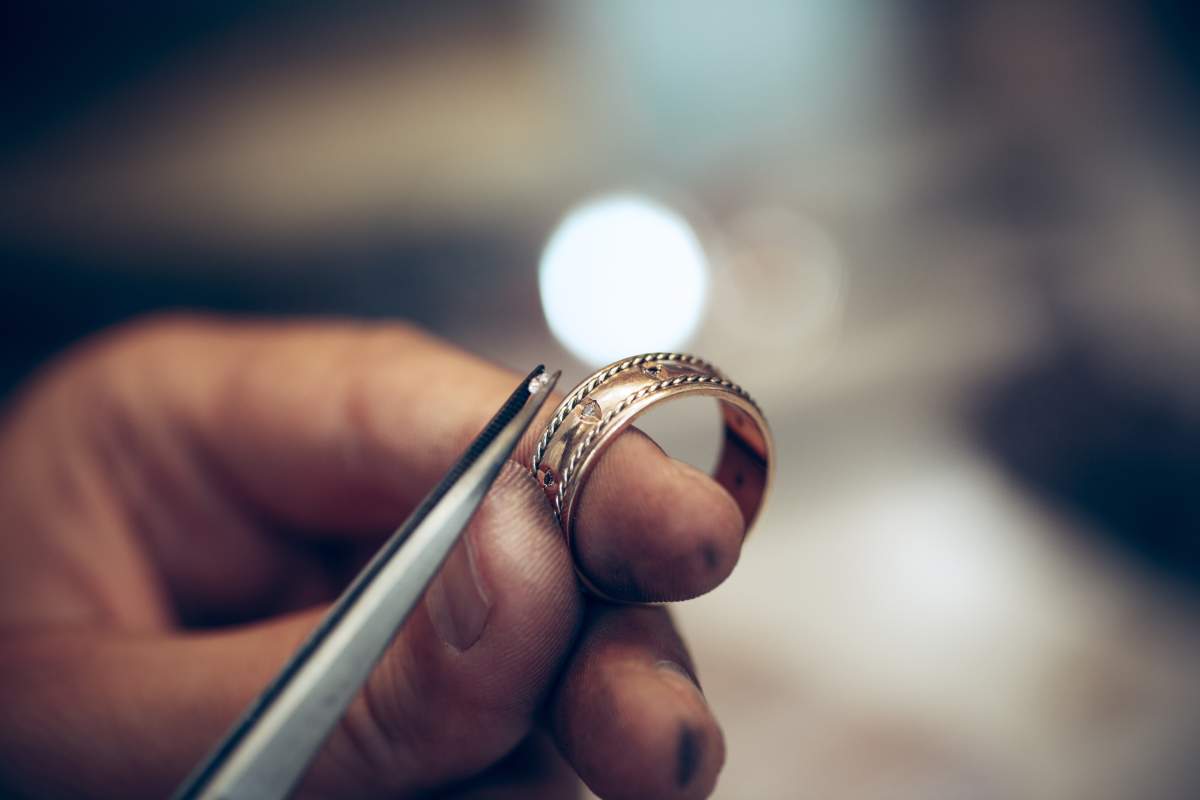
For a valuable or emotionally significant item, the safest approach is non-destructive examination followed by a written identification from a qualified gemological laboratory when necessary. This becomes especially relevant before selling, insuring, dividing an estate, or making a high-value purchase.
What paperwork should accompany a gemstone?
A report should clearly identify the material and state whether the stone is natural, laboratory-grown, treated, or an imitation. Descriptions should not rely only on vague terms such as “genuine,” “real,” “created,” or “simulated.”
Pay attention to the wording:
- Natural generally indicates a gemstone formed in nature.
- Laboratory-grown or laboratory-created indicates a man-made stone with properties substantially like the natural gem.
- Synthetic has a technical meaning and should not be confused with a cheap imitation.
- Imitation or simulated indicates a different material made to resemble another gemstone.
- Treated means the stone has been altered in some way, such as through heating, filling, dyeing, irradiation, or coating.
A receipt, appraisal, or sales description may confirm what was represented, but it is not always a scientific identification report. Keep photographs, descriptions, packaging, and transaction records together if the stone was purchased online or from a private seller.
What should local residents watch for in jewelry at home?
Humidity, salt air, sunscreen, perspiration, and frequent outdoor use can affect jewelry over time. In a coastal community such as Millville, moisture and airborne salt can contribute to tarnish on metal and residue around settings, but these conditions do not determine whether a gemstone is genuine.
Store pieces separately in a dry container. Avoid leaving jewelry in bathrooms, near windows with strong sunlight, or in places exposed to rapid temperature changes. Before examining a stone, clean it gently with lukewarm water and a small amount of mild soap only if the piece is known to tolerate moisture. Do not soak jewelry if the stone may be fracture-filled, dyed, glued, coated, or assembled in layers.
The most dependable home strategy is to document what can be observed without causing damage: color, transparency, inclusions, facet condition, setting details, and any available paperwork. Treat those observations as clues rather than proof.
When is testing beyond the home worthwhile?
Further identification is sensible when the gemstone has substantial monetary or family value, when its description is unclear, or when the result could affect insurance, resale, an estate, or a legal disagreement.
A proper examination may determine the gemstone species, whether it is natural or laboratory-grown, whether treatments are present, and sometimes where the stone originated. Origin determination is more specialized than basic identification and may not be possible for every gem.
The practical rule is simple: home inspection can uncover warning signs, but laboratory testing is needed for dependable identification. Avoiding destructive tests protects the stone while preserving the information needed for a more accurate evaluation.