
 See My Latest Article on HelloNation
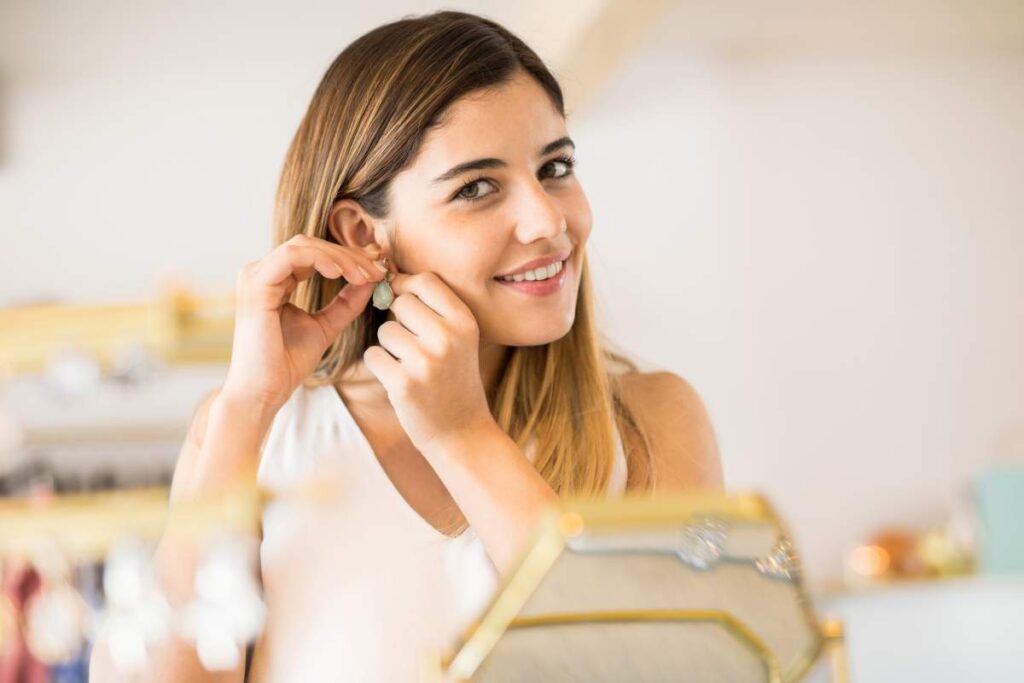
Earrings can change how the face appears by adding length, width, movement, or visual balance. The most useful starting point is face shape, but comfort, hairstyle, neck length, personal style, and daily activities matter just as much.
How can you identify your face shape?
The easiest method is to look at the overall outline of the face rather than focusing on individual features. Stand in front of a mirror with the hair pulled away from the face, then consider the width of the forehead, cheekbones, and jaw, along with the total length of the face.
Most faces fall into one of six general categories:
- Oval: The face is longer than it is wide, with gently rounded cheeks and a narrower jaw.
- Round: The face has similar width and length, with fuller cheeks and a softly curved jawline.
- Square: The forehead, cheekbones, and jaw are relatively similar in width, with a more defined jaw.
- Heart-shaped: The forehead is wider, while the chin is narrower or more pointed.
- Long or oblong: The face is noticeably longer than it is wide, often with straighter cheek lines.
- Diamond-shaped: The cheekbones are the widest point, with a narrower forehead and jaw.
A face does not need to fit one category exactly. Many people have a combination of shapes, and earrings should be selected according to the features a person wants to emphasize or soften.
Which earrings work well for an oval face?
Oval faces are versatile because their proportions are already relatively balanced. Most earring styles can work, including studs, hoops, drops, chandeliers, and geometric designs.
Medium-sized earrings often provide a pleasing sense of proportion. Teardrop shapes, rounded hoops, and softly angular styles can complement the natural balance of an oval face without making it appear noticeably longer or wider.
Very long earrings may still be attractive, but their effect is more dramatic. If a longer style is chosen, consider pairing it with a simple neckline or a pulled-back hairstyle so the earrings remain visually intentional rather than competing with other details.
What earrings flatter a round face?
Earrings that add vertical movement can make a round face appear longer and more defined. Drop earrings, narrow dangles, elongated ovals, and slim geometric styles are often effective choices.
A pendant or teardrop shape draws the eye downward, creating length without requiring a large or heavy design. Angular earrings can also add contrast to softer facial contours.
Very wide hoops and short, rounded designs may emphasize facial width, especially when they end near the fullest part of the cheeks. That does not make them unsuitable, but the effect is broader and more playful rather than lengthening.
Which earrings suit a square face?
Square faces often look balanced with earrings that soften or contrast with strong jawlines. Rounded hoops, oval drops, curved designs, and rounded-edged geometric earrings can create a gentler visual transition.
Longer earrings may also work well because they extend the face vertically. Designs with movement can keep the overall look from appearing too rigid.
If the goal is to highlight a square face, structured earrings with clear angles can reinforce its natural definition. If the goal is to soften it, avoid choosing only sharp-edged shapes and consider curved silhouettes instead.
What earrings are best for a heart-shaped face?
Heart-shaped faces are usually wider near the forehead and narrower toward the chin. Earrings that add visual weight near the lower part of the face can help create balance.
Teardrops, triangular designs with the wider portion at the bottom, and chandelier earrings are useful examples. Medium-length styles can also draw attention toward the jawline without making the forehead appear wider.
Small studs are a practical everyday choice, particularly when paired with hairstyles that already add fullness around the lower face. Very top-heavy earrings may emphasize the width of the forehead, especially when they sit close to the cheekbones.
How should someone choose earrings for a long or oblong face?
For a long face, earrings that add width are often more flattering than very narrow, vertical designs. Medium or large hoops, clustered studs, rounded drops, and wider geometric styles can make the proportions appear more balanced.
Earrings that end around the middle of the cheek or near the jaw may add useful horizontal emphasis. Shorter drop earrings can also work well.
Extremely long, thin earrings may make the face appear longer. They can still be worn successfully, particularly with a wide neckline or fuller hairstyle, but they create a more elongated and formal effect.
What earrings complement a diamond-shaped face?
Diamond-shaped faces are widest at the cheekbones and narrower at the forehead and jaw. Earrings that add softness near the jaw or balance the cheekbones can be especially effective.
Oval drops, curved hoops, chandelier styles, and earrings with a wider lower portion can help create a smooth visual progression. Shorter earrings with rounded edges may also complement the face without adding excessive width at the cheekbones.
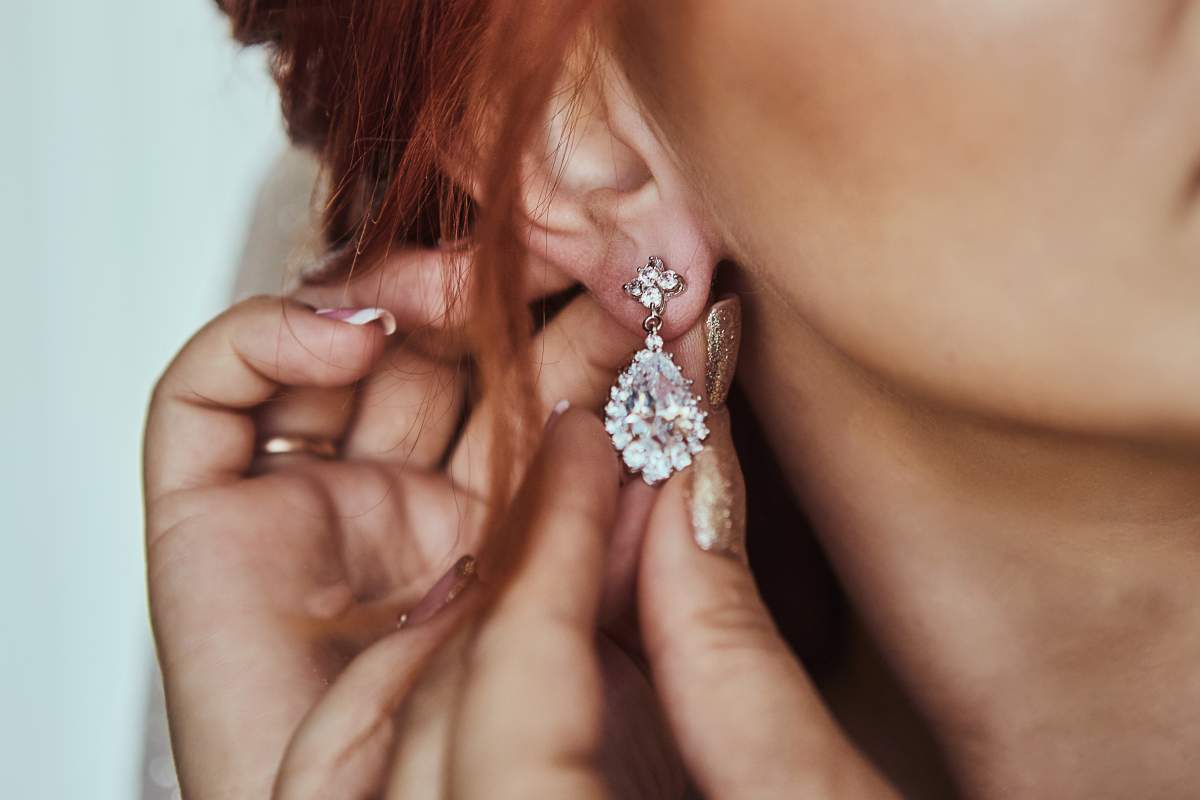
Very wide designs that align directly with the fullest part of the cheeks can make the center of the face appear broader. Narrower styles or designs with visual weight lower down often create better balance.
Do hairstyle and neck length matter as much as face shape?
Yes. Face shape provides a useful guide, but hair and clothing can change how earrings are seen.
Short hair or hair pulled back exposes the full earring and often makes a larger design more noticeable. Long or layered hair may partially cover earrings, making a brighter finish, larger silhouette, or more substantial shape easier to see.
Neck length also affects proportion. Long drops may be more comfortable visually with an open neckline, while shorter earrings can pair neatly with high collars, sweaters, or scarves. For residents of Millville, DE, seasonal wardrobes can make this especially practical: lightweight studs and small hoops may suit active summer days, while longer drops can work well with dressier layers during cooler months.
How do weight, comfort, and daily habits affect the choice?
A flattering earring is not useful if it pulls on the earlobe or becomes uncomfortable after an hour. Weight matters more than size alone. A large hollow hoop may be lighter than a small solid piece, while dense metal or multiple decorative elements can make a compact earring surprisingly heavy.
Consider these practical questions:
- Will the earrings be worn for several hours?
- Do they catch on sweaters, scarves, hair, or protective clothing?
- Are they suitable for outdoor activities or windy conditions?
- Do the backs stay secure without pressing painfully?
- Could humidity, perspiration, or skin sensitivity affect comfort?
In warm, humid weather, lightweight designs and secure but breathable fittings may be more comfortable. Earrings worn for everyday errands, work, or outdoor activities should generally be simpler and less likely to snag.
Does metal color need to match skin tone?
Metal color is a style preference, not a strict rule. Yellow, white, and rose-colored metals can all suit a wide range of complexions.
A useful approach is to compare the earring with clothing and other jewelry already worn. Yellow tones can create warmth, white tones can appear crisp and understated, and rose tones can provide a softer contrast. Lighting also changes appearance, so a pair that looks different under store lighting may appear more subtle in daylight.
The best choice is usually the color that feels harmonious with the wearer’s wardrobe and personal preferences.
Should earrings match the face shape exactly?
No. Face-shape guidelines are starting points, not rules. Many people deliberately choose contrast: a person with a round face may prefer large round hoops, or someone with a square face may enjoy angular earrings that emphasize strong features.
The most reliable selection combines three factors: the visual effect desired, the wearer’s comfort, and the setting where the earrings will be used. Face shape helps predict proportion, but personal style determines whether that proportion feels right.